
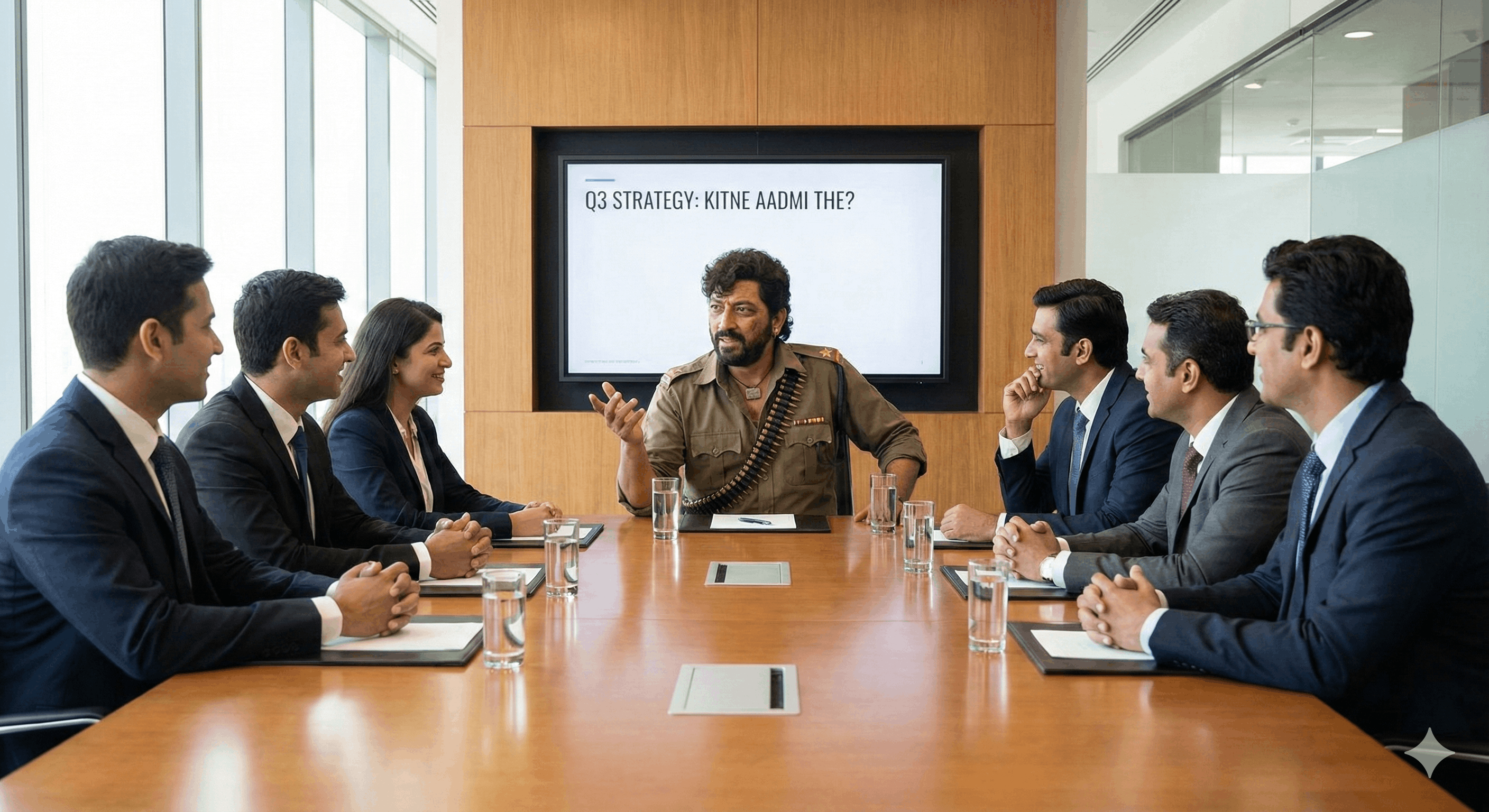
When Salim-javed wrote this timeless dialogue they relied on just the simple turn of phrase to add spice to the Gabbar charm. But did they know it would become so iconic? Wasn’t it this instinct to find what tickles the masses that made them legends?
A classic fight back from the creatives across ad agencies in the old days when account executives with their shiny new MBAs brought research and focus group data to shoot down a sexy new creative idea. Creative people across the arts know when a tune or an angle would make their output an instant hit. It is for this understanding of the human psyche that artists are revered. Of course there are the artsy elitists leaving you scratching your head but we’re talking about the hit-you-square-between-the-eyes art that works across audiences.
Cut to the digital designers who rather call themselves UX/UI like something stored in a medicine cabinet than artists. I know I’m generalising which is even more wrong in this age of specialisation. This type comes from an age and time when digital design is highly functional and quite manipulative. Here the audience are users who need to be nudged to perform tasks sometimes productive but mostly to the benefit of businesses that have turned unicorns. So how does one go about grabbing the sub-goldfish attention span of the post-modern junta spoilt for choice? “Ask the user” say the UX/UI practitioners.
But the real question is does anyone really ask the users? No way. Just think about it. Every project comes with a TAM, SAM and SOM that needs to be served NOW. There are a special breed of managers in every product company bred to conjure up cataclysmic outcomes if the wireframes are not shipped by Wednesday EOD. And then there are the startup founders who create their own wireframes and compete with these UX/UI people and insist their micro-interactions will shake the foundations aka disrupt the business forever. In this healthy atmosphere the user is sometimes called to ‘co-create’- as if. Even before they leave the office corridors their inputs are part of a file labelled WTF is wrong with users these days.
Commercial art is a widely accepted term these days but not so long ago it was the deal with the devil. And the only cure is to flex the intuitive muscle- usually just as the user leaves the office. If you ask me it’s a welcome relief to see people develop empathy and think for their users. And unlike the old days we are all users and the empathy requirement is not much. Just dig a bit and you know how standing at the street corner waiting for the cab to arrive as you squint at the new notification hoping against hope that the driver has not cancelled the ride as your friends have decided to move on without you. Almost every situation and context is not beyond our super-saturated imagination and role-play comes naturally.
So we wing it and hope the user buys it. And in many cases they do- human behaviour is becoming as predictable as never and we set up a series of gimmicks that build up to the punch line like the standup act we all are these days. And it works – it’s mostly logical and not the leap of faith that good creative used to be. Just the logic is sometimes a bit twisted as you show one incentive after another and entice the user towards the buy button.
So yes user-centric it is as it used to be in the old days- like during the East India Company days. The question to ask could be ‘kiska Aadmi tha?’
Leave a Reply